

Reishi (Ganoderma lucidum) doesn’t look like a mushroom you’d cook. It’s woody, tough and shiny, as if someone varnished it. But it has one of the richest histories of any fungus on earth.
The “mushroom of immortality”
Known as lingzhi in Chinese, reishi has been part of traditional Eastern practice for over 2,000 years. In ancient times it was associated with emperors and royalty and became a symbol of longevity, harmony and good fortune. Its nickname, the “mushroom of immortality,” says a lot about how revered it was. You’ll find it painted, carved and woven through classical Chinese art, often next to cranes and deer, other symbols of long life.
What exactly is reishi?
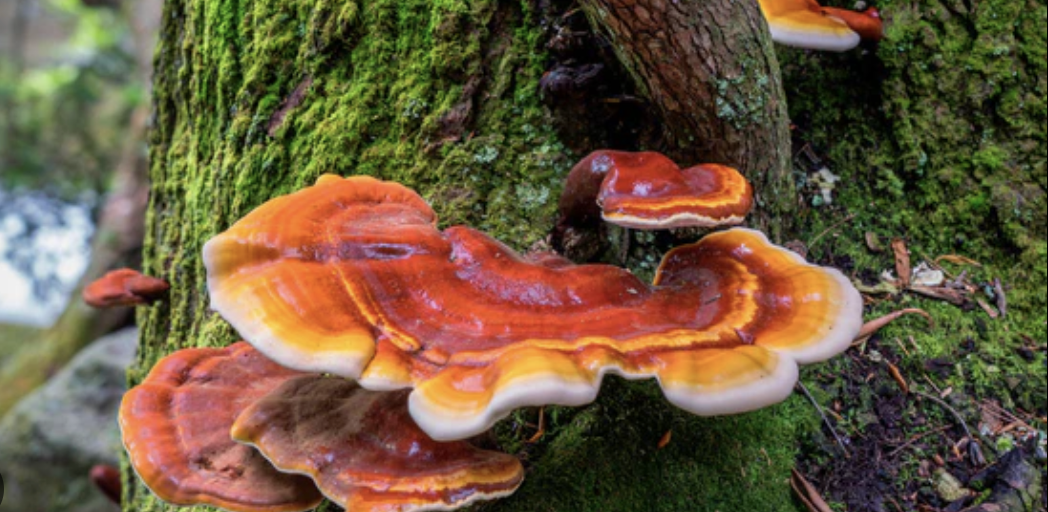
Reishi is a bracket fungus that grows on decaying hardwoods like oak, maple and elm. Look for a kidney- or fan-shaped cap with a glossy reddish-brown surface that fades to a pale edge. It’s too hard and bitter to eat fresh, so it’s traditionally dried, sliced or powdered and then brewed into teas or made into tinctures and extracts.
Foraging and growing reishi
Reishi grows in temperate forests worldwide, usually from late summer into early fall, on stumps, trunks and fallen logs. That lacquered shine is your best clue. Some look-alikes can be harmful, so learn from a local foraging group or an experienced guide before harvesting. Reishi is also easy to buy dried or powdered, and many home growers cultivate it on logs or in grow bags.
Why people bring it into their routines
Reishi contains compounds researchers find interesting, including polysaccharides and triterpenes, and it’s often described as an adaptogen in traditional herbal practice. Many people like a warm cup of reishi tea as part of an evening wind-down ritual. Research is ongoing, so approach it with curiosity, not expectations.
Reishi in your kitchen
Reishi isn’t for sautéing, but it’s lovely brewed.
1. Reishi tea
- 1 to 2 slices of dried reishi
- 2 cups water
Simmer the slices for 20 to 30 minutes, strain, and sip. Honey, lemon or a coin of ginger all help.
2. Reishi smoothie
- 1 banana
- 1 cup spinach
- 1 tsp reishi powder
- 1 cup almond milk
Blend until smooth. Sweet fruit and creamy milk balance reishi’s bitterness.
3. Reishi-infused broth
- 3 to 4 slices dried reishi
- 4 cups vegetable or chicken broth
Simmer for 30 to 60 minutes, strain, and use as a base for soups and stews.
What does reishi taste like?
Bold: earthy, woody and noticeably bitter. Warming spices like ginger, cinnamon and clove pair beautifully with it, and a little honey goes a long way.
Reishi has been part of human ritual for a very long time. A slow cup of reishi tea on a cold evening is a nice way to join that story.
These statements have not been evaluated by the Food and Drug Administration. This product is not intended to diagnose, treat, cure, or prevent any disease.