

Some mushrooms are pretty, some are delicious, and some are just plain wild. Cordyceps is firmly in the wild camp, and that’s exactly why mushroom lovers find it so fascinating.
A brief history
Cordyceps comes from the high plateaus of Tibet, Nepal and western China, where herders have gathered it for centuries. It appears in traditional Chinese texts, where it was associated with vitality and long life. It was once so rare and sought after that it was worth more than its weight in silver.
A lifecycle like science fiction
Cordyceps is a genus of fungi with a famously unusual lifecycle. The best-known wild species (now called Ophiocordyceps sinensis) infects caterpillars underground. Over time the fungus replaces the host’s tissue with mycelium, then sends a slender fruiting body up through the soil. If that sounds like a nature documentary, it is. Cordyceps fungi have starred in more than one.
Where it grows, and how it’s grown now
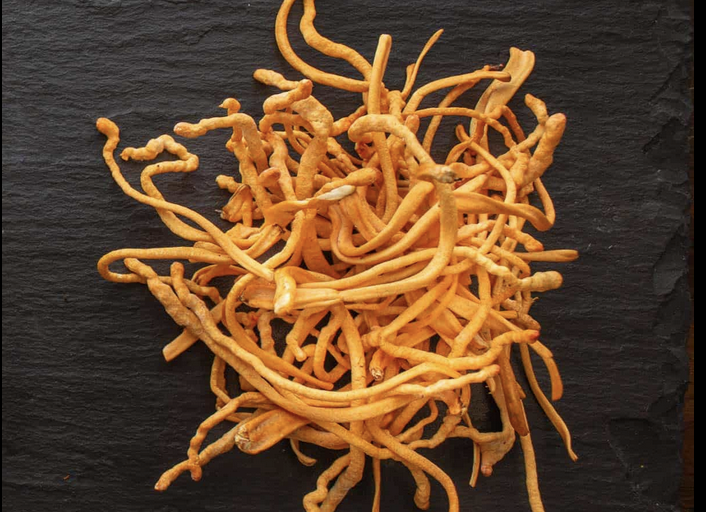
Wild cordyceps grows only in harsh, high-altitude meadows, and finding it takes deep local knowledge. Because wild harvest is scarce and expensive, most cordyceps today is a related species, Cordyceps militaris, cultivated on grain or other substrates in controlled settings. That’s where the bright orange strands you see in markets and products usually come from. No caterpillars involved.
Why it’s popular today
Cordyceps has become a favorite for active-day and morning routines, and researchers continue to study compounds such as cordycepin. Much of the research is still early, so we like to think of cordyceps as an interesting addition to a routine, not a promise.
Cooking with cordyceps
Dried C. militaris has a mild, savory, slightly nutty flavor.
- Soups and stews: rehydrate and add for color and depth.
- Smoothies: a spoonful of powder blends right in.
- Tea: simmer dried strands or stir in an extract.
- Stir-fries: the strands add a pleasant chew.
Recipe 1: Cordyceps chicken soup
Ingredients
- 1 whole chicken, cut into pieces
- 2 tbsp dried cordyceps
- 1 onion, chopped
- 2 carrots, sliced
- 2 celery stalks, sliced
- 4 garlic cloves, minced
- 6 cups chicken broth
- Salt and pepper
Method
- Soak the cordyceps in warm water for 20 minutes, then drain.
- In a large pot, cook the onion, carrots, celery and garlic until soft.
- Add the chicken and brown it.
- Add the broth and cordyceps and bring to a boil.
- Simmer for about 1 hour, until the chicken is tender. Season and serve.
Recipe 2: Morning cordyceps smoothie
Ingredients
- 1 banana
- 1 cup spinach
- 1 cup almond milk
- 1 tbsp cordyceps powder
- 1 tbsp honey (optional)
- Ice
Method
Blend everything until smooth and creamy. Drink right away.
Recipe 3: Cordyceps stir-fry
Ingredients
- 1 cup fresh or dried cordyceps
- 1 bell pepper, sliced
- 1 cup broccoli florets
- 2 tbsp soy sauce
- 1 tbsp sesame oil
- 2 garlic cloves, minced
- Cooked rice or noodles
Method
- If using dried cordyceps, soak for 20 minutes and drain.
- Heat the sesame oil over medium heat and cook the garlic until fragrant.
- Add the cordyceps and vegetables and stir-fry for 5 to 7 minutes.
- Stir in the soy sauce, cook 2 more minutes, and serve over rice or noodles.
From Himalayan meadows to your soup pot, cordyceps is proof that the fungal kingdom is stranger, and more wonderful, than we tend to imagine.
These statements have not been evaluated by the Food and Drug Administration. This product is not intended to diagnose, treat, cure, or prevent any disease.